Monday, April 20, 2015

Here's the cover for my new book

Following up on my last post and considering the opinions, thoughts, and comments of the people who wrote about the three proposed covers, Susan Brier, the graphic designer, and I settled on the Proposed Cover 2, with modifications in the pictures and the type.

While many people liked the Proposed Cover 1 for its simplicity and impact, I rejected it because the illustration had nothing to do with the story. Proposed Cover 3 seemed too cluttered to me, and the pictures clipped to a wire was off because in the novel the pictures are Polaroids. Indeed, one correspondent was so misled, she suggested a darkroom theme for the cover, red background and all.

While I agree entirely with the idea that a cover illustration should evoke or embody the theme of the book, I don't think that's always possible. Here Susan has chosen to illustrate three key elements of Death in a Family Business: the appliance-TV store setting, some incriminating Polaroid photographs, and a Cessna airplane.

Again, I thank everyone who looked at and shared their thoughts about the design.

Friday, April 10, 2015

What is the most engaging cover design?

One element that puts off self-published novel is, I believe, the cover; too many look amateurish. And while you may not be able to tell a book by its cover, an attractive, professional cover can only help.
Proposed cover 1

While Createspace and other publishers offer templates into which authors can pour their designs, I think it's an unusual author who can design an attractive, engaging, and effective cover. I certainly can't.

I am fortunate to have an exceptionally talented graphic designer friend, Susan Brier, who has her own firm, The WriteDesign Company. She designed the jackets for my two earlier novels and is working on ideas for the new book.

Death in a Family Business is a mystery, a cozy, and the action centers around an appliance-TV retail store. Polaroid photographs of nude women and a Cessna airplane play a role in the story. 

Tommy Lovell's dream restaurant has failed, taking his shaky marriage along with it. He's licking his wounds back in his childhood bedroom while he takes stock of his life at the end of his 20s. Reluctantly, Tommy agrees to tag along when his father offers to help family friend Otto Jonker save a struggling store in a dying Berkshire town. Tommy is ready for a change of scenery, maybe a bit of romance, and—if he's really lucky—more opportunities to fly his father's Cessna.
Proposed Cover 3

The trip takes a disastrous turn after Otto skids off the road during a midnight motorcycle ride and is critically injured, forcing Tommy and his father into unexpected danger as they make disturbing discoveries about Otto’s personal and professional troubles.  

Susan is also one of my beta readers and she not only suggested a couple of editorial improvements (both of which I took), she came up with three proposed cover approaches shown here. 

Proposed Cover 2

I know which one I prefer, but I'm not a prospective buyer, so I'm looking for some outside opinion. Given what I've said about the story, which of the three possible designs do you think works best? 

Many thanks for your votes and comments.

Sunday, April 5, 2015

How the publishing industry's doing

Publishers Weekly has reported that industry revenue—i.e., revenue of the 1,209 publishers who report to the Association of American Publishers—rose 4.9% in 2014. It does not say whether the increase was due to greater unit sales or higher prices. Nor does the article report unit volume.

It does report that total adult book sales revenue fell 1.4%. On the other hand, within the adult trade segment, e-book sales rose 1% and accounted for 27.2% of adult trade sales (up from 26.6% in 2013). Trade paperback sales increased 2.5%; mass market paperback sales fell 4.2%, and hardcover adult trade book sales fell 8.2%.

An earlier story on the Publishing Technology website gave a little more detail about 2014's book and e-book unit sales. It pointed out that, based on Nielsen Bookscan data, e-book sales cycles are different from print book sales cycles. Print book sales tend to peak in the last quarter of the year as people buy books for holiday gifts; e-book sales have tended to peak in the first two quarters of the year as people download titles into the readers they received for Christmas.

The analysis suggested that e-book sales are not plateauing but adult fiction is declining—reinforcing the PW story. According to the Bookscan figures for all books, adult fiction accounted for 45% of the 650 million books sold in 2004. By 2014, adult fiction took a smaller slice of a smaller pie: 40% of 635 million books. In other words, if these figures are accurate, the industry sold roughly 39 million fewer adult fiction titles last year than it sold in 2004. Sobering news for anyone who writes adult fiction.

One comment to the Publishing Technology story points out that these figures are based on ISBN numbers and "since the majority of e-books published by independent authors rarely have ISBN number" they are not counted in the figures. It suggests to this writer that "more and more readers of e-books are switching to independent authors, and traditionally published e-books are paying the price." That would be good news for adult fiction authors if true, but without a reliable source of numbers there is no way to know.

Friday, March 27, 2015

Can DartFrog find—and sell—the best of the best?

One challenge for self-published authors is independent bookstore distribution. (Forget about Barnes & Noble, Books-A-Million, and other chains.) Indeed, the Huffington Post recently ran a piece by Brooke Warner, "5 Reasons Why Your Book Isn't Being Carried in Bookstores." These are:

1. You're up against too much competition.
2. Your publicity and marketing is looking a little lackluster, or you're not communicating what you're doing.
3. You're self-published.
4. You don't have any reviews.
5. You're not pounding the pavement.

Read Warner's full essay to see what exactly she's talking about. She explains why independent bookstores do not carry most books—and especially self-published books. Which means DartFrog may have a business opportunity.

As the company's website states, "There are many tremendous self-published authors out there, who most people will never have an opportunity to read. Why? Because no one knows who they are. Part of DartFrog's mission is to find and publicize the independently published gems, marketing them to local bookstores across the United States."

So how does it work? "We review each self-published book we receive, and choose to distribute the best of the best. In this way, we relieve bookstores of the need to sift through submissions from self-published authors, while simultaneously providing a professionally reviewed index of the best of the self-published books. This benefits bookstores, who will now have a central source by which to assess a self-published book's worthiness and order it for their store. It also benefits self-published authors, who gain credibility and visibility." Also—and this should appeal to bookstores—DartFrog will not distribute a book that appears on Amazon. (It's not clear if this also includes books published on Amazon's CreateSpace.)

This is an interesting idea—DartFrog acting as the gatekeeper. I could find nothing on the site about the financial arrangement. If your book costs you, say, $3.75 to manufacture and you put a list price on it of $13.95 and the bookstore actually sells it for that, how much does the bookstore keep (typically 40%), how much does Dart Frog keep, and how much goes to the author? Are the books returnable by the bookstores? Who pays for shipping?

Dart Frog's appeal to self-published authors seems to be something like, "You're not getting the kind of sales on Amazon you want but if you were in independent bookstores you'd sell many more." Few self-published authors, I suspect, believe their books are attracting the readers they deserve. (I certainly feel that way.)

The appeal to bookstores is, "We're a source of excellent books that are not available on Amazon." All this assumes that:

(a) There are enough excellent self-published books to build a viable business;

(b) The DartFrog staff can recognize what self-published books are in fact the best of the best and will sell and also convince bookstore buyers their judgement is reliable and worth acting on (we're back to Warner's point #1);

(c) The system can generate enough sales and revenue to keep everyone—booksellers, authors, DartFrog—on board.

Because the company only set up shop in the middle of February 2015, I think it's much too soon to know. I think also any self-published author should ask many more questions before signing up.

Sunday, March 22, 2015

How do you keep someone else's $15 million without getting killed?

Lou Malloy has an unusual problem on his release from a 15-year bid in a Georgia prison. No one has been able to find the $15 million that Lou and his two partners (now long dead) stole from an Indian casino—and people think Lou can lead them to it. Indeed, during Lou's exit interview, the warden points out that he could collect a $1.5 million reward from the insurance company if he turned in the money. Lou isn't buying that.

Lou has a second problem. His sister and only close relative was murdered six months before his release. So Lou wants two things: to keep the money and to find and punish whoever killed his sister.

Dead Money Run by J. Frank James is the most recent mystery in the "Lou Malloy crime series." It is a hard-boiled thriller that reminded me of Micky Spillane. It is a book of short chapters and almost unrelenting excitement as Lou and Hillary Kelly avoid cops, kill mobsters, and try to unravel the mystery of who killed Lou's sister and why.

Lou meets Hillary at two in the morning at the Jacksonville, FL, bus station in Chapter 6 on page 20. (I said these are short chapters.) "The girl was really a woman and who could pass for eighteen about ten years ago. She had crow's feet at the corners of each eye and her complexion had seen more than its share of sun. Pulled down in front of her face was a floppy hat that made it difficult to get a good look at her. She looked attractive, in a cute sort of way." Going through Hillary's purse, Lou establishes that she's a PI, but doesn't kill her.

In no time, Lou and Hillary are a team; Lou has found the hidden $15 million and taken walking around money from the cache; recovered guns and ammunition hidden with the money; and murdered two low-level mobsters and fed them to the crocodiles. The mob is interested in Lou because it had been using the Indian casino to launder money, and the Georgia family really, really wants the $15 million back.

As the body count rises, the story grows more and more complex. Lou has to connect with a buddy from prison for some added muscle. The story of the sister's death becomes more mysterious. The US Homeland Security Agency may be interested in what Lou and his partners stole. Lou murders without remorse or compunction because he feels (with justification) that if he doesn't, his enemies will murder him. James does not, however, describe the deaths in detail, something I regard as a form of pornography.

James is able, even with a complex plot, to keep the threads clear and the action moving. And while the writing is not fancy—indeed most of the book is dialogue—James can sketch a character in a few lines. Writing about a very bad man he says, "Jack Bellay reminded Angel [a not quite as bad man] of a coyote in his appearance. He had narrow eyes and a long nose and a mouth the size of a bee's ass. His father told him to never trust a man with a small mouth." Angel should have listened to his father.

Readers who enjoy a hard-boiled mystery and are not put off by literary violence will enjoy Dead Money Run. I found it a hoot.

Tuesday, March 17, 2015

What! There's No "Proper English"?

Oliver Kamm, an editorial writer for The Times of London, touched a nerve when he wrote an essay that he—or the headline writer—titled, "There is no 'Proper English'." It appeared in The Wall Street Journal on March 13 and when I checked three days later it had provoked 630 comments.

His argument is simple: "We know that a certain practice is a rule of grammar because it’s how we see and hear people use the language. That’s how scholarly linguists work. Instead of having some rule book of what is 'correct' usage, they examine the evidence of how native and fluent nonnative speakers do in fact use the language. Whatever is in general use in a language (not any use, but general use) is for that reason grammatically correct."

The "rules" of grammar—never use a double negative, never split an infinitive, never end a sentence with preposition, never join two sentences with a comma, and more and more.—are not rules at all says Kamm. They are at best stylistic conventions. "If someone tells you that you 'can’t' write something, ask them why not. Rarely will they have an answer that makes grammatical sense; it is probably just a superstition that they have carried around with them for years"

Kamm agrees there are rules of grammar. Just listen to a parent correct a small child who says, "Me want cookie." That's not how native English speakers past a certain age ask for a cookie. Kamm's argument: If a double negative like "I can't get no satisfaction" is both understandable and in general use, it's correct. He also argues that native speakers can adjust their language for the situation. You don't use the same language in a formal report to the board of directors that you use in a letter to your child at camp.

Although Kamm's essay seems eminently sensible to me, not everyone thinks so. Among the critical comments:

"The explanation of the problem with the garbage peddled by Mr. Kamm is set forth in Bernard Shaw's play Pygmalion."

"Mr Kamm is wrong and people who use Standard English are right. My 'pedantic' English teacher once told me, 'if your friends understand your non-Standard English, all that proves is your friends are stupid too'."

"Attitudes like those Mr. Kamm propounds will have disastrous consequences. In particular, the catastrophic disregard for the law, in general, that is now so prevalent even in common law countries."

"What bull s h i t. Remember Ebonics? If Obama said, 'I be mad at Repubicans,' would Mr. Kramm call that correct English usage?"

So although Kamm tried to emphasize what is in general use—not any use—(and "I be mad . . ." is not in general use although it may be some day), these people and dozens more insist there is a Proper English and they know what is it. Good luck to them.

The issue for fiction writers, it seems to me, is that by attempting to meet some pedantic standard of English grammar, they can squeeze all the life out of their prose. Worse, they write dialogue that sounds like a textbook. (I once had a copy editor who started changing my active verbs into passive; I had her fired.) I say ignore the pedants,  read the best writers you can find, and try to see what makes their English sparkle. Then go write.

Tuesday, March 10, 2015

The PI's friend has extrasensory preception

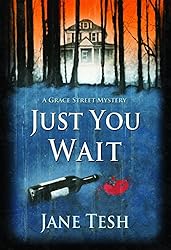
I didn't know you could write a charming murder mystery, which probably reflects my limits rather than the genre, but I would call Jane Tesch's Just You Wait charming. It is the fifth novel in a series set in a small fictional North Carolina city and has an ensemble cast who live in a big old house on 302 Grace Street. The narrator is twice-divorced (but young)  PI David Randall and a key resident is his friend Camden.

Camden is psychic, develops a second mental power during the story, and is engaged to Ellin who wants him to move out of 302 Grace Street. If you are willing to suspend disbelief and accept Camden's powers (I was), the book dances right along. Camden, for example, senses that a missing woman has been buried in her basement because one of the house cats rubs against his leg. When the cops dig in the basement, there she is. Unfortunately for Camden and anyone who would like to hire his powers, they can be erratic and ambiguous.

The body in the basement was an actress in the town's community theater and a thread through the novel is a production of My Fair Lady, thus the book's and chapter titles. Within a few pages we are thoroughly involved with Randall's cases and the personal lives of his friends. The cases include the dead woman, an absconding partner of a cosmetics entrepreneur (who has the great name Folly Harper and a passion for peach), shoplifters stealing pharmaceuticals, and—pro bono—helping a jazz musician woo his woman. To Tisch's credit, she never has to abandon Randall's point of view and never loses the reader as he works his way through events to identify the villain.

She also is able to say a lot in a relatively few words: "I glimpsed her blond curls bouncing indignantly as she charged out to her sleek silver Lexus. She looks really good going away. She has a dynamite figure, plus big blue eyes and a great smile." One more example: "I had deputized various members of the household before with good results [no doubt reference to earlier books in the series]. Angie looked like Queen of the White Trash Mamas, but I knew beneath that tonnage lurked a shrewd mind. I also knew she could take care of herself, and she could more a lot faster than anyone would suspect."

So, Just You Wait has off-stage murder, complicated romance, extrasensory perception, small city life, jazz, community theater, all with a plausible villain. What else could you ask for?


Thursday, March 5, 2015

Should you be in an MFA writing program?

Ryan Boudinot, who is identified as executive director of Seattle City of Literature and who identifies himself as a former instructor in a low-residency MFA program, has written a provocative piece titled "Things I Can Say About MFA Writing Programs Now That I No Longer Teach In One." He lays out his argument with a number of flat statements, supporting each with a paragraph of prose. Examples of these statements include:

—Writers are born with talent.
—If you didn't decide to take writing seriously by the time you were a teenager, you're probably not going to make it.
—If you complain about not having time to write, please do us both a favor and drop out.
—If you aren't a serious reader, don't expect anyone to read what you write.
—No one cares about your problems if you're a shitty writer.
—You don't need my help to get published.
—It's not important that people think you're smart.
—It's important to woodshed. Which means that once you've graduated with your MFA, you still have to spend time—perhaps years—learning to find your own voice while you write unpublishable work.

Boudinot says that "the vast majority of my students were hardworking, thoughtful people devoted to improving their craft despite having nothing interesting to express and no interesting way to express it." But, "Being a writer means developing a lifelong intimacy with language. You have to be crazy about books as a kid to establish the neural architecture required to write one."

When I last looked at the Comments to the post, more than 200 people had weighed in, a good many of them rejecting Boudinot out of hand. An early writer said, "This article gives no consideration to students' feelings and no thoughtfulness about the courage it takes to undertake apprenticeship of an art form. Not to mention how the practice of writing transcends boundaries, fosters community, literally SAVES people's lives, and creates a deeper, more enriched individual which potentially can flower into a million ripples and collect momentum and influence in unexpected ways even beyond imagining." Inadvertently (in my opinion) making Boudinot's case.

While a number of people assumed he was a terrible teacher who hated teaching, I read the comments by two former students who said Boudinot was thoughtful, considerate, and helpful. And there are comments like this, "Thank you Ryan for writing THE TRUTH. MFA programs are filled with mostly talentless writers in the same tradition that so many people with unmanaged psychological problems are drawn towards a degree in psychology."

I feel lucky I do not have a dog in this fight. I have a Master of Arts, not a Master of Fine Arts. My MA from City College of New York required six literature courses, six workshop courses, ability to translate a second language (with a dictionary), and a substantial final project—a novel, a collection of short stories, or a collection of poetry I have taught creative writing, but only as a volunteer and only to prisoners and to middle school students.

Based on my life experience, however, I agree with Boudinot. Not everyone has talent, and you should not decide that writing novels would be a good retirement activity unless you have no interest in being read. People who complain about not having time to write make time for other activities; those are their priority.

I also think, based on many MFA-graduate works I've read, that too many such writers have nothing interesting to express. They have not lived long enough to have enough experience or to know enough about the world to say something interesting. It would be interesting to know how many MFA graduates are working writers five years after graduation.

Wednesday, February 18, 2015

Erotic Suburban Mischief

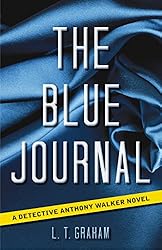
The first sentence of The Blue Journal: A Detective Anthony Walker Novel by L.T. Graham is naked foreshadowing: "There was no reason for Elizabeth Knoebel to suspect that this was going to be the last day of her life." So by the end of Chapter 1 we've seen Elizabeth shot in the head by "the murderer."

Elizabeth is a lovely, sexy sociopath, the wife of a cold, distant, but affluent New York surgeon. She'd been seducing the men in her husband's marriage therapy group and describes the encounters on her laptop. These reflect her contempt for the men who she never names: "In the end, the greatest aphrodisiac for a man is the pleasure he thinks he has given his partner. This is the way to own him." "Confident men are often attractive men, a combination that makes them the easiest to seduce." "T proved to be an easy seduction. He's the sort of man who needs to feel he's in charge, the easiest sort to manipulate." Unfortunately for the novel's plausibility, Elizabeth seems to be pure malevolence. We never understand (or can infer) why she, who has looks, money, and a small talent to write porn, should be hell bent on destroying other people's lives.

What this means for Anthony Walker, formerly a New York cop, now a Darien, CT, detective, is that he has a plethora of suspects. Just about everybody who has had any contact with Elizabeth has a reason to kill her. The first challenge is to identify the men she's written about, which turns out to be a fairly simple matter. But there are other potential suspects: the therapist who is leading the marriage therapy group for the husbands, their wives, the town's First Selectman, her surgeon husband.

It means the novel is a puzzle that Walker has to solve. Readers who enjoy solving (or at least following along as the detective solves) a complex mystery will have a lot of fun with The Blue Journal. Other readers may be put off by the shifts in point of view and by actions of characters who have clearly never read or watched a mystery.

For example: "[Randi, the therapist] wanted to tell Walker about the anonymous note, about the threatening phone call she had just received, about her fears concerning several of her patients and Elizabeth Knoebel. But not yet, she decided. Not yet." To Graham's credit, she (he?) does not do what inexperienced mystery writers do when a character withholds information from the detective; she doesn't kill Randi off before she can tell Walker what she knows.

This is also a book for readers who enjoy passages from Elizabeth's journal like: "Oddly, there are very few men I have ever known who have the same curiosity about the physiology of the vagina that they have for their own equipment. They tend to view a woman's pussy as a goal to be achieved rather than part of a process to be enjoyed . . . "

Reportedly Graham is working on another Anthony Walker novel and will, with The Blue Journal experience behind her, overcome the challenges of point of view, motivation, and character development that limit this first effort.

Friday, February 13, 2015

How important is it for a writer to have a website?

This may seem like a dumb question to ask on a blog, but I see it come up from time to time. I thought the case was settled, but apparently not. So I asked a writer's group for the cons and pros of a writer's website.

Three cons seem to be cost, time, and learning. While it's possible to spend several hundred dollars to have a website designed, it's not necessary. Using the free tools available on Blogger, my wife and I (neither of us designers or particularly computer savvy) designed and created this site for the cost of a couple of hours of intense concentration and no cash.

Time is an issue. To be effective, a blog, website, Facebook page, Twitter account, and more and more require attention and fresh—you will excuse the word—content. A someone pointed out, a blog or website that has not been updated for six months is probably more harmful than no blog at all.

Finally, you do have to learn how to use the computer and the blog tools effectively, but once you're up and running, it should be no harder than writing a letter.

The pros are more obvious. A website/blog is a way to build an audience while you are writing your next book. It is a way to raise your hand when someone is looking for information, which is why the labels (or keywords) are so important. It's a way share your thoughts about—and around—a topic that's important to you.

And it might actually engage someone enough to consider, look into, buy, read, and recommend your book to someone else.